



If you would like to be profiled in this newsletter, here’s how.
Read Tommy’s short story, "Hedonics, Inc”:
Click the image to get your copy!

Or his short story, The Search for Intelligence, on Substack.
Want to support ADC and its authors? Leave a review!
Q&A
How do you come up with ideas for your short stories?
Mostly by thinking about where my philosophical views seem to break down or give counter-intuitive results. Then I try to come up with scenarios that illustrate that.
For example, I'm partial to utilitarianism, the view in ethics that what is "good" is producing the greatest good for the greatest number. But there are a lot of problems with this view that I try to explore in my story Hedonics, Inc (published in After Dinner Conversation!). I started by just imagining some force that was truly trying to maximize utility, like utilitarianism espouses. I landed on an organization, guided by an AI, whose charter was to maximize utility. This intense focus on maximizing a narrow vision of "good" quickly leads to problems. This leads to questions about what is missing from that definition of good, and whether the whole endeavor of maximizing one thing is really the right way to conceive of "good".
Another example: I'm a functionalist about consciousness. That means I think mental states (and therefore minds) are a product of the function they perform, not the physical substrate of the brain. In other words, if you write a computer program that perfectly simulates what my brain does, it would act exactly like me, and I therefore have a hard time believing it wouldn't be conscious. But this means the idea of "mind uploading" is possible (at least in principle—I have an article about why it's implausible in the real world). If mind uploads are possible, the mind can be encoded just in data. And data can be copied (and altered) at will. This leads to all kinds of crazy counter-intuitive scenarios that challenge our concepts of selfhood, which I try to explore in my stories.
By thinking about the extremes, and how the view seems to break down at those extremes, it can add nuance to our views.
Which philosophy or philosopher most aligns with your own beliefs?
I already named some positions I hold above, but the philosopher that most aligns with my beliefs would probably be Daniel Dennett (who recently passed away). When it comes to consciousness, he was probably the most famous functionalist. He was also a compatibilist towards free-will and articulated why free-will was not threatened by a deterministic universe—a view I agree with wholeheartedly (though I haven't figured out how to make that into a science fiction story… yet).
Which authors or books would you recommend to those who want to challenge their own thinking?
Greg Egan, especially Diaspora, Permutation City, Schild's Ladder, Quarantine, and the short story collection Axiomatic. Egan is a writer of hard science fiction, meaning his stories are heavily constrained by what is scientifically plausible (though he takes some major liberties in Quarantine). But they're also wildly speculative. Many of his stories involve the idea of minds as software like I mentioned above, but also explore post-scarcity and what we would value if we had the ability to change anything—even ourselves.
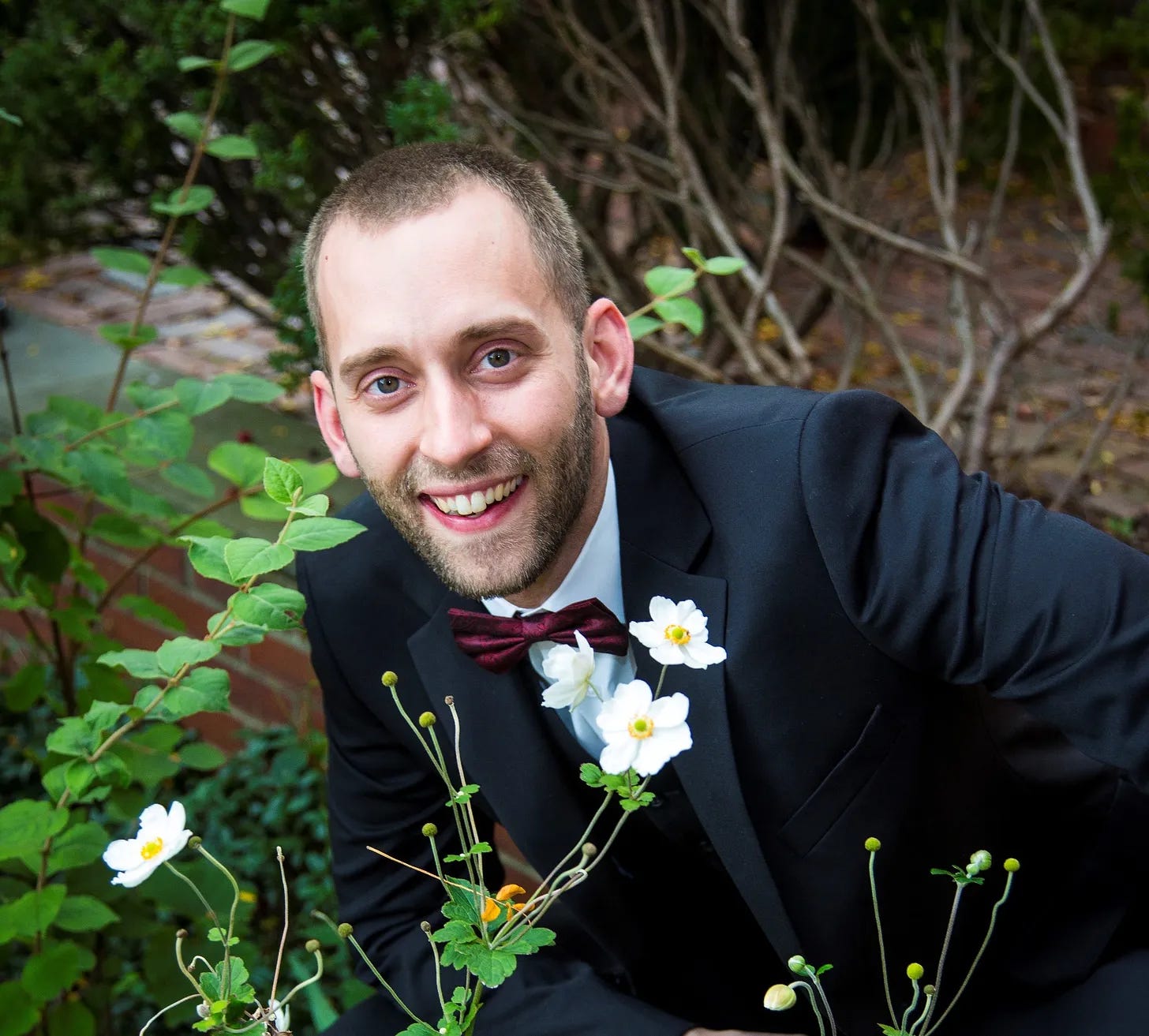
Tommy Blanchard holds a PhD in neuroscience as well as degrees in computer science and philosophy. He is interested in philosophy of mind, science, and science fiction, and writes about these topics in his Substack newsletter, Cognitive Wonderland. By day, he works as a data scientist. He lives in Shrewsbury, Massachusetts with his wife, two sons, and two mischievous rabbits.
Check out his website: tommyblanchard.com
Good interview. I've been doing a lot of reading on quantum theories of consciousness, so this fits in nicely. Also, will have to add Greg Egan to the SciFi reading list.